

Kids Coloring Book by Numbers
GOBEEZ YAZILIM TİCARET
I approached Kids Coloring Book by Numbers as a parent looking for a calm, easy activity to share with a child rather than as a serious drawing tool. That distinction matters. This is a free educational game from GOBEEZ YAZILIM TİCARET built around coloring pictures with numbered areas, and its appeal is immediate: a child can start making visible progress without needing to understand a complicated interface first. The experience is aimed at Everyone, so it is suitable for a broad family audience, although younger children will still benefit from an adult nearby during the first session.
What makes the game worth trying is the combination of a familiar coloring-book activity and a simple learning prompt. Instead of asking a child to choose every color independently, the numbered format gives the activity structure. I found that this can make the first few minutes less intimidating for a child who is not yet confident with freehand drawing. At the same time, it is important to set expectations: this is best understood as a guided coloring activity, not a full art studio, an open-ended drawing canvas, or a deep educational curriculum.
What to expect when you open the game
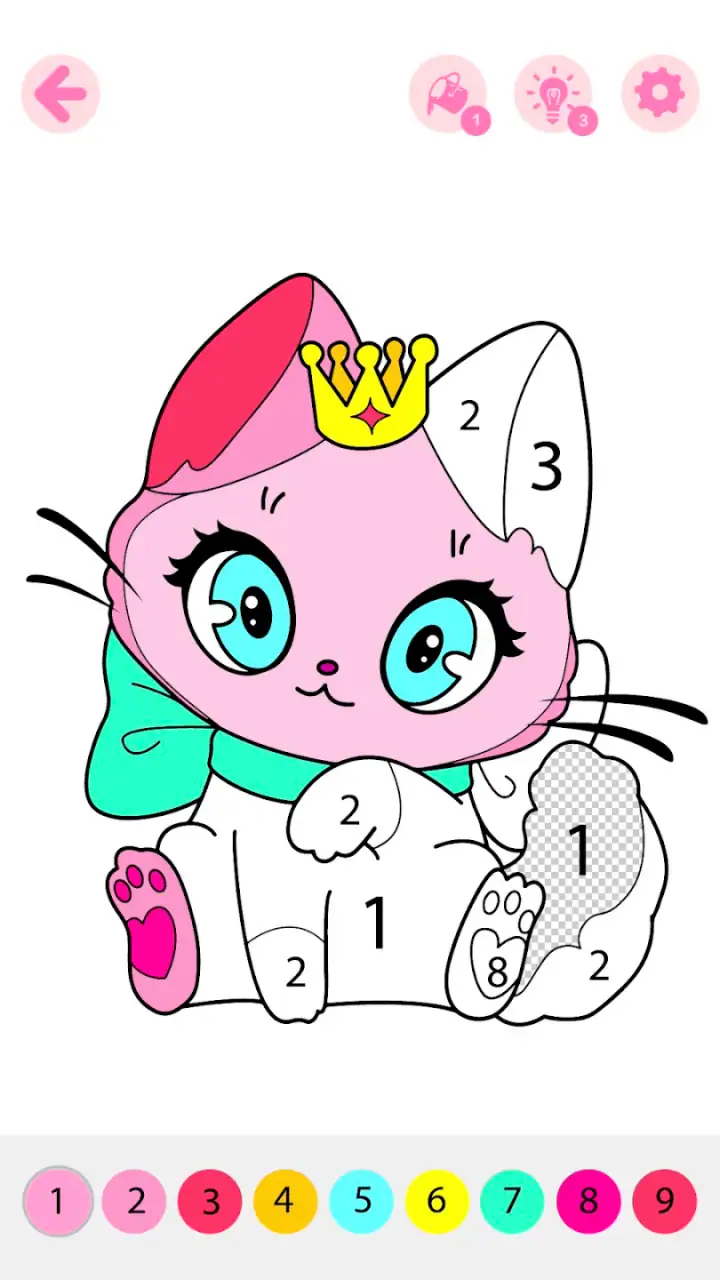
The core idea is straightforward. A picture is divided into numbered sections, and the child colors those sections by following the matching numbers. That design turns a large image into a series of small tasks. For a first-time user, this is helpful because the child does not have to decide where to begin or worry about choosing a perfect palette. The next action is usually visible from the picture itself.
I would describe the mood as relaxed and task-focused. The animated coloring-book presentation gives the activity more movement than a printed page, while the number system keeps it organized. A child can concentrate on recognizing a number, locating the corresponding part of the image, and completing one small area before moving on. Those steps are modest, but they create a clear sense of progress.
The game is particularly suitable for children who enjoy coloring but lose interest when an activity feels too open-ended. It can also work well as a short shared activity after school, during a quiet afternoon, or while a parent sits nearby and talks through the picture. I would not rely on it as a substitute for physical drawing materials. Paper, crayons, and paint offer different sensory and creative experiences, while this game is more convenient and controlled.
Related News






One useful way to think about the numbered format is as a bridge between recognition and action. A child sees a symbol, searches for its matching area, and then completes the action. I would not present that as formal instruction, but it does give the session a small learning rhythm. Parents can reinforce it naturally by asking, “Which number are you looking for now?” rather than taking over the screen.
The game has attracted an average rating of 4.3 from around 900 ratings, and it has passed 100 thousand installs. Those figures suggest that it has found a real audience, but they should not be treated as a guarantee that every child will enjoy the same style. Some children prefer choosing colors freely, while others like the reassurance of a clear answer. The numbered approach is strongest for the second group.
Who will get the most from it
I think it is a good match for a child who likes pictures, responds well to simple goals, and enjoys finishing one small section at a time. It is also useful for a parent who wants an activity that can be started quickly without explaining a long set of rules. Because the game is free to begin, it is easy to test the basic experience before deciding whether it belongs in your family’s regular rotation.
Gallery
It is less suitable for a child who wants complete control over every color, brush, shape, and mark. A traditional drawing app would be better for experimentation, while a physical coloring book would be better for children who enjoy the feel of paper. I would also skip it when the goal is advanced learning, detailed drawing practice, or a competitive game. The strength here is the simple coloring routine, not breadth.
Getting through the first setup without frustration
My advice for the first launch is to sit with the child for a few minutes instead of handing over the device and walking away. The main challenge is not technical complexity; it is making sure the child understands the relationship between a number and a colored area. Once that connection is clear, the rest of the activity becomes much easier to follow.
Start by looking at the whole picture before touching the screen. Ask the child to point out any visible numbers and choose one to search for. This turns the first session into a small treasure hunt rather than a test. If the child immediately taps around without a plan, gently redirect attention to one number. The goal is to establish a repeatable workflow: choose a number, find its sections, color them, and then choose the next number.
I also recommend keeping the first session short enough to end on a success. A child does not need to complete an entire picture to understand the game. Finishing a few matching sections can be enough for the first meaningful result. Ending there may leave the child interested in returning, rather than turning the activity into a demand to finish everything at once.
The game is free, but in-app purchases range from $9.99 to $149.99 per item. That is the most important setup detail for families. Before allowing a child to use the game independently, I would review the purchase controls on the device and make sure the child understands that any purchase requires an adult. The free entry point is convenient, but the presence of optional paid items means the game should be treated like other child-oriented apps with purchasing available.
There is no reason to rush into those purchases during the first session. First check whether the basic coloring loop holds the child’s attention. If the child enjoys selecting numbers and filling areas, you already know the central idea works. If the child loses interest quickly, buying more content would not necessarily solve the underlying mismatch.
The current version is 3.9, and the game requires Android 5.1 or later. For someone using an older device, checking compatibility before planning a family activity is sensible. On a supported device, I would still make sure the screen is clean and that the child can tap accurately. Small, deliberate taps are more rewarding than repeatedly pressing a crowded area and wondering why nothing happened.
The first successful action
The first real win comes when the child completes a numbered section and can immediately see that the picture has changed. To make that moment happen quickly, I would choose a large, easy-to-find area rather than starting with the smallest detail. Ask the child to identify a number, locate the same number in the picture, and tap carefully inside that space.
If the first attempt works, pause and let the child notice the result. This is a small but important teaching moment. The game is not asking the child to color randomly; it is rewarding a match between an instruction and a location. After that, invite the child to find another area with the same number. Repeating the same action once or twice builds confidence more effectively than explaining every possible control in advance.
A practical routine is to work by number instead of jumping around the image. For example, the child can search for every section marked with the current number before moving to the next one. This reduces visual wandering and makes the picture feel manageable. It also gives parents an easy way to help without doing the coloring themselves: point toward an uncompleted section, but let the child make the final tap.
Another useful approach is to let the child choose the order of the numbers after the first example. That preserves some independence inside the guided structure. The game supplies the rules, but the child can still decide which available number to pursue next. In my experience, that balance is better than either complete freedom or constant adult instruction.
For a child who struggles with number recognition, keep the language simple and consistent. Say the number aloud, ask the child to repeat it, and then search together. Avoid turning the activity into a correction-heavy lesson. The purpose is to keep the child engaged with the picture while gently connecting symbols to actions.
Common points of confusion
The most likely confusion is assuming that any tap inside the picture should add color. The numbered system requires a match, so a child may tap several times in the wrong place and think the game is not responding. I would explain that the picture is divided into specific numbered spaces and that the child needs to find the matching one. Demonstrating one successful area is usually clearer than giving a long explanation.
Another possible frustration is a very small section. Children often expect coloring to behave like a broad brush, but a detailed part of the image may require slower, more accurate tapping. When that happens, I would encourage the child to zoom attention onto the area mentally rather than rushing. If the child is tired, moving to a larger section is more sensible than insisting on precision.
Some children may also believe that the game limits their creativity because the number determines the color. That is a fair criticism. The numbered format is excellent for guided completion, but it does not offer the same creative control as choosing every shade yourself. If your child’s favorite part of coloring is inventing unusual combinations, use this game as a change of pace rather than the only art activity.
Parents should also be clear about what the game is teaching. It can encourage attention, matching, and step-by-step completion, but it should not be presented as a replacement for broader early education. A child still needs conversation, physical play, reading, and hands-on creative work. I see the game as a focused activity that can fit into that larger mix.
Purchase prompts are another area where adult supervision matters. The game costs nothing to start, but the optional items can be expensive at the upper end. I would avoid giving a child unsupervised access to the purchasing flow and would explain that new content, if considered, is an adult decision. This keeps the coloring session focused on the activity instead of turning it into a negotiation about unlocking more options.
How it fits into an everyday routine
A realistic use case is a ten-minute wind-down before dinner. I would sit beside the child, let them choose a picture or starting number, and use the first few completed areas to establish the pattern. Once the child understands the process, I could prepare food while remaining close enough to answer questions. The activity works best in that kind of nearby-supervision setting: independent enough for the child to act, but simple enough for an adult to step in when a number or small section causes confusion.
It can also be useful during travel or waiting time when carrying paper supplies is inconvenient. The digital format keeps the activity contained on a phone or tablet, and the guided structure makes it easier to resume after an interruption. I would not promise that every child will stay occupied for a long period, though. The right session length depends on the child’s patience and interest in completing pictures.
For siblings, the game may work if they take turns choosing the next number or helping one another locate sections. However, it is not automatically a multiplayer experience. Two children reaching for the same screen can create more conflict than cooperation, especially when one child wants to control the taps. If sharing is the goal, set a clear turn-taking rule before opening the picture.
The developer, GOBEEZ YAZILIM TİCARET, positions the product in the educational game space, but I would judge it primarily by how well it supports a calm, guided coloring habit. Its educational value is practical and limited: it gives children a structured way to connect numbers with picture areas and complete a visual task. That is worthwhile, but it is not the same as a complete learning program with lessons, assessment, or a broad curriculum.
Choosing between this and familiar alternatives
Compared with a regular coloring book, this game removes the pressure of deciding which color belongs in each space. That makes it easier for a hesitant child to begin, and it can reduce the mess associated with physical coloring. The trade-off is that the child loses tactile contact with paper and has less freedom to make unexpected artistic choices.
Compared with an open drawing application, it offers a clearer route to completion. A blank canvas can be exciting for an imaginative child but overwhelming for someone who says, “I don’t know what to draw.” Here, the picture supplies the destination. The trade-off is that the child practices following a visual code more than inventing an image from scratch.
Compared with a broader educational game, it is narrower and easier to understand. There are fewer concepts to learn before the child can act, which is useful for a quick activity. On the other hand, families looking for reading practice, arithmetic lessons, or a variety of subjects should choose a more comprehensive educational app and keep this one as a coloring option.
One non-obvious advantage is that the game can help a parent observe how a child handles guided tasks. Does the child search carefully, rush, ask for help, or abandon small details? Those observations can be useful when choosing other activities. The game is not an assessment tool, but its simple structure makes the child’s working style easy to notice.
Another practical insight is to use it as a transition activity rather than a reward that must become bigger and bigger. A short picture-completion session can signal that quiet time is beginning. Because the central action is repetitive and predictable, it may suit a child who benefits from a gentle routine. I would keep the expectation modest: the value is in a focused pause, not in maximizing screen time.
When to continue and when to move on
After the first successful coloring action, the next step is to let the child complete a small group of sections with minimal help. Watch whether they can remember the number they selected, locate another matching area, and recover from a missed tap. If those actions become comfortable, the game is doing its job as an accessible guided activity.
If the child repeatedly asks to choose different colors, moves away from the numbered areas, or becomes frustrated by precision, I would switch to a free coloring app or physical materials. That is not a failure; it simply shows that the child wants a different kind of creative control. Likewise, if you need a structured lesson rather than a coloring break, another educational game will probably be a better choice.
I would also reassess the app if the child only wants to open purchase screens or asks for paid items before engaging with the coloring itself. The free starting point gives you a useful trial. Let the child demonstrate sustained interest in the actual activity before considering any optional spending, and keep purchase decisions firmly with the adult.
For families who enjoy the format, a good progression is to begin with adult guidance, reduce help once the child understands the number-matching routine, and later invite the child to explain the process to someone else. Teaching the steps back can reveal whether the child truly understands the activity or is simply tapping wherever an adult points. That small change turns a passive session into a more active one.
Overall, I found Kids Coloring Book by Numbers most convincing as a first-step digital coloring game: approachable, focused, and easy to introduce without a long tutorial. Its best qualities are the clear number-to-picture workflow, the gentle sense of accomplishment, and the possibility of sharing a quiet activity with a child. Its limits are equally clear: creativity is constrained by the numbered design, the educational scope is narrow, and in-app purchases require responsible adult control.
For a child who wants a guided path from opening a picture to completing visible sections, I would recommend trying the free version. Sit together for the first setup, help create one quick success, and then give the child room to continue. If that rhythm feels satisfying, the game can earn a place among short family activities. If your child wants unrestricted drawing or a richer learning program, choose a different tool and keep this one only if its simple coloring structure genuinely fits.
FAQs for Kids Coloring Book by Numbers
What is Kids Coloring Book by Numbers?
Kids Coloring Book by Numbers is a simple coloring app designed to help children create pictures by filling numbered sections with matching colors. It usually includes animals, vehicles, characters, nature scenes, and other child-friendly illustrations. The number-based format makes the activity easy to understand while encouraging concentration, color recognition, hand-eye coordination, and creativity in a relaxed, game-like environment.
Is Kids Coloring Book by Numbers suitable for young children?
The app is generally suitable for preschool and early-school-age children because its controls are straightforward and the coloring process does not require advanced reading or drawing skills. However, the ideal age can vary depending on the child’s ability to recognize numbers and use a touchscreen accurately. Parents should review the age rating and supervise younger children, especially when advertisements or in-app purchase options are available.
Does the app require an internet connection to work?
Many coloring activities can often be used offline after the application and its available content have been installed, which makes it convenient for travel or areas with limited connectivity. Nevertheless, some features, advertisements, new picture packs, cloud functions, or reward systems may require an internet connection. It is best to open the app once while online and check which pages remain accessible offline.
Is Kids Coloring Book by Numbers free to download and use?
The app may be available as a free download, but the exact experience depends on the version installed from Google Play or the App Store. Free editions can include advertisements, locked picture collections, optional purchases, or premium tools. Parents should check the store listing for current pricing and review the purchase settings on the device before allowing a child to play independently.
Is Kids Coloring Book by Numbers safe for children?
The coloring concept itself is child-friendly and does not involve competitive pressure or complicated gameplay. Safety also depends on the app’s advertising, data practices, external links, and purchase features, which can change between versions. Parents should read the privacy information, use parental controls, disable unauthorized purchases, and supervise children when they first use the app to ensure the content and permissions are appropriate.
Pros
- Simple number-based coloring is easy for young children to understand.
- Bright artwork keeps sessions engaging without requiring reading skills.
- Helps practice color recognition
- focus
- and basic number matching.
- Works well for short
- independent play sessions.
- Completed pictures provide a satisfying sense of achievement.
Cons
- Some pictures or features may be locked behind ads or purchases.
- Repeated patterns can become less challenging for older children.
- Touch accuracy may be difficult for children with smaller screens.
- Ads can interrupt play if the free version includes them.
- Limited creative freedom compared with a traditional blank coloring app.


